
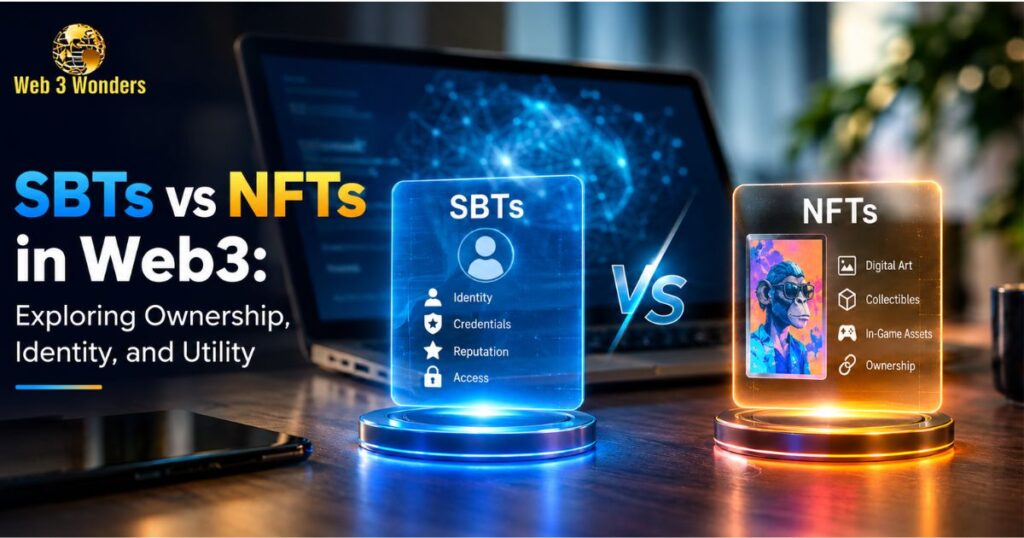
Two token models that both live on blockchain technology and are usually mixed up by people; soulbound tokens (SBTs) and Non-fungible tokens (NFTs). SBTs are an exciting development in web 3 which is non-transferable. On the other hand, traditional NFTs can be bought, sold, or traded. This introduces new ways to represent ownership, identity, achievements, and digital assets.
In this blog, we will explore what NFTs and SBTs are, highlighting their unique features.
Understanding Soulbound Tokens (SBTs)
Soulbound tokens (SBTs) are a type of NFT designed to stay permanently connected to a specific wallet. It creates a verifiable record of their identity, achievements, or memberships. SBTs cannot be transferred or sold to someone else, making them useful for representing personal credentials. Since these records can be verified on-chain, they can support digital identity and reputation systems across Web3.
Non-Fungible Tokens: A Brief Introduction
On the contrary, Non-fungible tokens, in short, NFTs, are unique digital assets. They can represent ownership or access to items such as artwork, collectibles, memberships, and digital content. Each NFT has distinct information recorded on a blockchain, making it different from interchangeable tokens. Unlike SBTs, most NFTs can be transferred, sold, or traded between wallets. This transferability supports digital marketplaces, gaming economies, and collectibles.
SBTs vs. NFTs: Key Differentiators at a Glance
While both tokens are blockchain-based technologies, they serve different purposes. Here are the core differences between SBTs vs NFTs in Web3 ecosystem:
1. Transferability
SBTs are designed to remain permanently connected to a specific wallet. They cannot normally be transferred or sold to another person. This makes them useful for representing personal achievements, memberships, or credentials that should stay linked to the original holder.
In contrast, traditional NFTs are generally transferable between blockchain wallets. Owners can sell, trade, or transfer them through marketplaces and other platforms.
2. Purpose
SBTs are mainly designed to represent identity-related information, credentials, achievements, memberships, or reputation. Their purpose is more focused on creating verifiable digital records than selling assets.
On the other hand, Traditional NFTs represent unique digital or physical assets. They can be used for digital art, collectibles, gaming items, memberships, and other forms of ownership..
3. Value
The value of Soulbound tokens is generally connected to the information they represent rather than their resale price. A verified qualification, achievement, or membership could strengthen a person’s digital reputation.
However, Non-fungible tokens can have financial or collectible value based on demand, scarcity, creator reputation, utility, and market activity. Owners may purchase NFTs because they appreciate the artwork, want access to certain benefits, or expect future demand.
4. Long-Term Use
Soulbound tokens can support long-term digital records of personal history, achievements, credentials, and community participation. Since they are designed to stay linked to a wallet, they may provide a continuing record that can be referenced by compatible applications.
Non-fungible tokens, on the other hand, can have long-term uses when they provide continuing access, ownership, membership, or utility. Their future usefulness depends on the project, creator, technology, and whether the NFT continues to offer meaningful benefits.
5. Risk of Fraud
SBTs can make credentials easier to verify because they are linked to specific blockchain addresses and are generally non-transferable. However, they cannot prevent all fraud. Fake credentials, compromised wallets, or incorrect issuer information can still create risks.
Traditional NFTs may face counterfeit collections, phishing, stolen artwork, and fake marketplaces. Checking the creator, collection, contract address, and marketplace remains important for both.
End Note
The debate of SBTs vs NFTs in Web 3 is less about which token is better and more about what each one is designed to accomplish. As Web3 applications continue developing, both token types can have distinct roles.
If you want to learn more about Blockchain use cases, visit Web3Wonders. Read our blog to know what the future of finance may look like.