
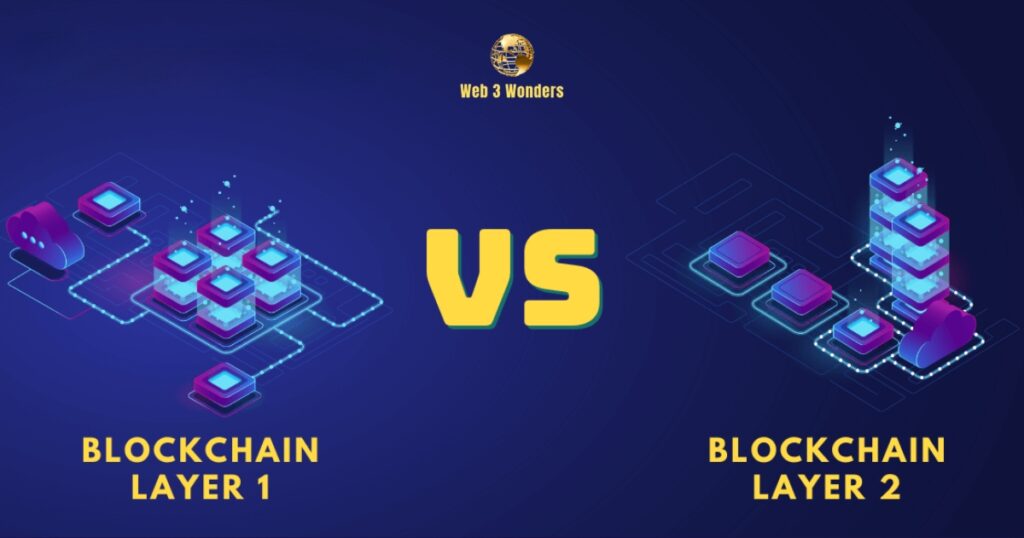
Despite the many benefits of blockchain technology, there is an increasing number of issues emerging day by day. One of its crucial concerns is scalability. In a decentralized system, every transaction goes through multiple layers of blockchain.
That’s why choosing the right layer for your Web3 development is essential that impact performance, security, and user experience. In this blog, we will explore the differences between layer 1 and layer 2 of blockchain, helping you to decide which one is better for your Web3 project.
Understanding Blockchain Layers
Blockchain layers refer to different levels of infrastructure designed to improve performance, scalability, and efficiency. Here we will explain Layer 1 and Layer 2:
Layer 1 Blockchain: A Brief Overview
A Layer 1 (L1) blockchain is the main blockchain architecture. It handles transaction processing, security, and consensus mechanisms directly on the network. L1 blockchain focuses on decentralization and security. However, as usage increases, these networks often face scalability issues such as slow transaction speeds and high fees. Classic examples include Ethereum, Bitcoin, and Solana.
What exactly Is Layer 2 Blockchain?
Layer 2 Blockchain refers to scaling solutions built on top of Layer 1 networks. These solutions process transactions off-chain and then settle them on the main blockchain. While reducing costs, this approach improves speed.
Layer 2 solutions help developers overcome limitations without changing the base blockchain. This makes them highly attractive for modern Web3 development projects.
Key Differences Between Layer 1 & Layer 2 Blockchain
In blockchain architecture, choosing between Layer 1 and Layer 2 solutions is one of the most important decisions. Understanding these layering solutions helps developers balance scalability, cost, and performance for their Web3 applications. Let us discuss these Blockchain fundamentals in detail:
1. Scalability
Layer 1 blockchains often face scalability limitations because every transaction must be validated by the entire network. This ensures security but slows performance during heavy usage.
That’s where Layer 2 solutions are needed. It improves scalability by processing transactions off-chain and then settling them on the main blockchain efficiently.
2. Transaction Speed
Due to consensus mechanisms and decentralized validation, Layer 1 networks typically process transactions at a slower pace. This can create delays during high network activity.
However, Layer 2 solutions significantly improve speed by bundling transactions together and reducing the workload on the main blockchain.
3. Security
Layer 1 blockchains provide strong native security through decentralized validation and consensus mechanisms. As a result, it makes them reliable and trustworthy.
On the other hand, Layer 2 solutions rely on Layer 1 for final settlement. This ensures security while improving speed and scalability without compromising overall network integrity.
4. Flexibility
L1 blockchains are designed to support core blockchain infrastructure and long-term decentralization. In contrast, Layer 2 solutions focus on improving user experience and application performance. This flexibility makes L2 ideal for high-traffic applications like Defi platforms and NFT marketplaces.
End Note
In short, the choice between L1 and L2 blockchains depends on the specific needs of your Web3 project. For decentralization, and foundational security, Layer 1 remains crucial, and foundational security. Layer 2 is increasingly becoming the go-to solution for scalability and user experience. By evaluating your needs carefully, you can choose the best blockchain layer for successful Web3 solutions.
If you want to learn more about Blockchain use cases and Web3, visit our site, Web3Wonders. Here, you will find informative blogs on Web3 & Blockchain Innovations.